
Documents & Informations

La Philosophie, une école de la liberté: enseignement de la philosophie et apprentissage du philosopher; état des lieux et regards pour l’avenir
UNESCO, 2007.
Chapitre IV, pp. 151 – 195, Découvrir la philosophie autrement – La philosophie dans la Cité
« Depuis quelques années, nous assistons à une montée en puissance de la philosophie « hors les murs », une philosophie désenclavée, qui à la fois se cherche et semble correspondre à un besoin fondamental ou vital de notre société. »
Bibliothèque en ligne de l’UNESCO

Towards a History of Philosophical Practices in Michel Foucault and Pierre Hadot
Federico Testa
Pli: the Warwick Journal of Philosophy. Special Volume. Self-Cultivation: Ancient and Modern. 2016, 168-190
This paper approaches the idea of philosophy that could be extracted from the reception of Hellenistic philosophical schools in Michel Foucault and Pierre Hadot. Stressing the idea of ‘way of life’, as well as the importance of ‘spiritual exercises’ and ‘ascetic practices’ to philo- sophical activity, I outline similarities between the two French philosoph- ers, in order to explore the possibility of a history of philosophy written form the concrete perspective of the technologies of the self and of spir- itual practices. I present Foucault and Hadot’s analyses of concrete practices and modes of engagement with life as a perspective that redefines philosophy, as well as a hermeneutical tool in the study of ancient philo- sophy. In order to highlight the collective aspects of the history of philo- sophy as a history of practices, I discuss Hadot and Foucault’s perspectives on the phenomenon of the ancient philosophical schools.
Cet article aborde l’idée de philosophie qui pourrait être extraite de la réception des écoles philosophiques hellénistiques chez Michel Foucault et Pierre Hadot. Soulignant l’idée de » mode de vie « , ainsi que l’importance des » exercices spirituels » et des » pratiques ascétiques » pour l’activité philo- sophique, je souligne les similitudes entre les deux philosophes français, afin d’explorer la possibilité d’une histoire de la philosophie écrite dans la perspective concrète des technologies du soi et des pratiques spirituelles. Je présente les analyses de Foucault et Hadot des pratiques concrètes et des modes d’engagement dans la vie est une perspective qui redéfinit la philosophie, ainsi qu’un outil herméneutique dans l’étude de la philo- sophie antique. Afin de souligner les aspects collectifs de l’histoire de la philosophie en tant qu’histoire des pratiques, je discute des perspectives de Hadot et de Foucault sur le phénomène des écoles philosophiques antiques.
Traduit avec http://www.DeepL.com/Translator (version gratuite)

A sampling of philosophical counseling frameworks, tools, and practices
Rick Repetti
Interdisciplinary Research in Counseling, Ethics and Philosophy – IRCEP
Rick Repetti – Full Professor of Philosophy at CUNY/Kingsborough, Fellow of the Center for Contemplative Mind in Society, APPA certified Philosophical Counselor, certified Cognitive Behavioral Therapist, certified Life Coach, and certified Mindfulness Instructor, trained in Gestalt Psychotherapy, author of several peer-reviewed articles, chapters, and books on meditation, mental freedom, and free will, practitioner and instructor in meditation and yoga since 1976, and 4th degree blackball in Shotokan karate. http://www.rickrepetti.com
In this paper I first argue for a somewhat paradoxically ‘methodless method’ of philosophical practice that includes as many methods as a practitioner can learn and include in their toolkit, as well as no method. Then I overview over a dozen major things, and some minor ones, that philosophical counselors and other philosophical practitioners might benefit from adding to their philosophical practice toolkits. These include: The DIME framework, 4e Cognitive Science, the 4Ps of knowing, the Gestalt change process model, Philosophical Fellowship (aka Philosophical Companionship), Dialectic to Dialogos, Nelsonian Socratic Dialogue, Self-Determination Theory, the Ikigai Framework, Philosophical Midwifery, the Eightfold Path, the Four Agreements, and Meditation. Where appropriate, I offer what I take to be basic elements of rationale for viewing certain of these items, particularly some that might not appear philosophical from an analytic perspective, as philosophical practice tools as we…
Dans cet article, je plaide tout d’abord en faveur d’une « méthode sans méthode » de la pratique philosophique qui inclut autant de méthodes qu’un praticien peut apprendre et inclure dans sa boîte à outils, ainsi que l’absence de méthode. Je passe ensuite en revue une douzaine d’éléments majeurs, et quelques éléments mineurs, que les conseillers philosophiques et autres praticiens philosophiques pourraient tirer profit de l’ajout à leur boîte à outils de pratique philosophique. Il s’agit notamment des éléments suivants : Le cadre DIME, la 4e science cognitive, les 4P de la connaissance, le modèle de processus de changement de la Gestalt, la camaraderie philosophique, la dialectique à Dialogos, le dialogue socratique nelsonien, la théorie de l’autodétermination, le cadre Ikigai, la sage-femme philosophique, l’octuple sentier, les quatre accords et la méditation. Le cas échéant, je propose ce que je considère comme des éléments de base de la justification pour considérer certains de ces éléments, en particulier ceux qui pourraient ne pas sembler philosophiques d’un point de vue analytique, comme des outils de pratique philosophique comme nous…
Traduit avec http://www.DeepL.com/Translator (version gratuite)

Critical and Creative Philosophical Practices
David Sumiacher
2016, Critical and Creative Philosophical Practices
In the following article, I propose to approach two transcendental categories for the comprehension and execution of philosophical practices: Critical dimension and creative dimension. In this case, I will make a description of the different elements, and the way each of them work, in general and particular, giving, at the same time, examples of how these two dimensions work, both in everyday life and in philosophical practice. After this, I will provide an integrating vision to help us to moderate many terms that are sometimes overrated; to understand some common tendencies in the people, groups and institutions; to use the alternation between polarities as a patron of working; to fuse methodologies and to classify different types of philosophical practices.
Dans l’article suivant, je propose d’aborder deux catégories transcendantales pour la compréhension et l’exécution des pratiques philosophiques : La dimension critique et la dimension créative. Dans ce cas, je décrirai les différents éléments et la manière dont chacun d’entre eux fonctionne, en général et en particulier, en donnant en même temps des exemples de la manière dont ces deux dimensions fonctionnent, à la fois dans la vie quotidienne et dans la pratique philosophique. Après cela, je fournirai une vision intégratrice pour nous aider à modérer de nombreux termes qui sont parfois surestimés, à comprendre certaines tendances communes dans les personnes, les groupes et les institutions, à utiliser l’alternance entre les polarités comme un patron de travail, à fusionner les méthodologies et à classer les différents types de pratiques philosophiques.
Traduit avec http://www.DeepL.com/Translator (version gratuite)
David Sumiacher – UNAM – Faculty Member – Prof. David Sumiacher is General Director, Co-founder and Trainer at CECAPFI (Educational Center for Autonomous Creation in Philosophical Practices with seats in Mexico, Colombia, Argentina and Italy). There he founded a Research Center and an Editorial specialized in philosophical practices. He is President of the Mexican Association of Philosophical Counseling, Vocal and Teacher Trainer in the Mexican Federation of Philosophy for Children and has been the organizer of the International Conference on Philosophical Practices (15th ICPP), which was held in Mexico in conjunction with National and Autonomous University of Mexico in 2018. He has taught in the Faculty of Philosophy and Letters at UNAM, he has been professor and coordinator of the Master in Philosophical Practices at the University Vasco de Quiroga and co-author of the Bachelor of Philosophy program at the Salesian Institute of Higher Studies in Mexico. He has taught seminars, courses and conferences at universities and academic events in America, Europe, Africa and Asia on education, philosophy, philosophical practices, philosophy for children, philosophical counseling and philosophy for organizations, among others: University of San Marcos (Peru), University of Seville (Spain), University of Athens (Greece), National Autonomous University of Mexico (Mexico), University of Buenos Aires (Argentina), Ça Foscari University (Italy), University of Cape Town (South Africa), Sogang University (South Korea), etc. He also has dozens of publications on these topics in books and journals in Argentina, the United States, South Korea, Holland, Spain, Brazil, Venezuela and Mexico, among others. One of the last books that he has coordinated is « Philosophy and New Normalities. Perspectives for a World in and Post Covid », in which wrote Dr. Mauricio Beuchot, Dr. Luca Scarantino, Dr. Antonio Campillo, among others.

Dialogue in philosophical practices
Luca Bertolino, Università degli Studi di Torino (Université de Turin), Faculty Member
2019, Controversies in the Contemporary World
Dans la littérature spécialisée italienne, le terme délibérément pluriel de pratiques philosophiques (« pratiche filosofiche ») et son introduction dans le débat philosophique international sont revendiqués par Alessandro Volpone (2004, p. 25).
En effet, au début des années 2000, lorsque certains universitaires italiens ont commencé à exprimer leur intérêt pour la Philosophische Praxis (généralement traduite par « pratique philosophique » ou « conseil philosophique », parfois par « consultation philosophique » ou « conseil philosophique »), Volpone a suggéré d’utiliser l’étiquette « pratiques philosophiques » pour désigner la « pratique philosophique » des perspectives philosophiques intellectuelles et pratiques de nature éminemment collective, dans lesquelles chaque participant rencontre des idées, en transcendant le moi dans un processus dialectique qui part de l’irréductibilité du monde réel et redécouvre constamment, par le biais de la réflexion critique, ce même monde. (…) Les pratiques philosophiques (…) peuvent se référer à un domaine sémantique général qui englobe des pratiques philosophiques particulières, telles que la philosophie pour enfants, le café-philo, le dialogue socratique, le conseil philosophique, la philosophie du management, etc. C’est-à-dire un domaine global qui les représente toutes et qui appartient de plein droit à la terminologie philosophique universelle. Sous la diversité des perspectives spécifiques, en fait, l’élément commun de ce que nous pouvons définir comme le mouvement actuel des pratiques philosophiques est la pratique sociale et culturelle de la philosophie, comme un modus vivendi et avec une valence politique – au sens de la Grèce antique (2000 ; maintenant 2004, p. 35).
Traduit avec http://www.DeepL.com/Translator (version gratuite)

Philosophical practice and its development in China: opportunities and challenges
Xiaojun Ding, Caifeng Xie & Feng Yu
Ding, X., Xie, C. & Yu, F. Philosophical practice and its development in China: opportunities and challenges. Humanit Soc Sci Commun 11, 494 (2024). https://doi.org/10.1057/s41599-024-02985-8
Cet article examine l’application et l’évolution de la pratique philosophique en Chine, qui utilise des principes et des méthodes philosophiques pour faciliter la compréhension et aborder les complexités de la vie. Nous visons à combler le manque de connaissances concernant la trajectoire et le paysage contemporain de la pratique philosophique en Chine et son impact sur l’épanouissement individuel et sociétal. Guidée par la question de recherche « Comment la pratique philosophique a-t-elle évolué en Chine, quels sont ses défis et ses perspectives d’avenir ? », cette étude adopte une méthodologie de recherche qualitative, comprenant une revue de la littérature, une analyse historique et des études de cas de communautés philosophiques chinoises. Les résultats indiquent une croissance florissante de la pratique philosophique en Chine, les philosophies chinoises traditionnelles étant adaptées pour fournir des conseils pratiques sur les questions contemporaines. L’expansion des communautés de pratique philosophique à travers la Chine reflète une adhésion croissante à ces pratiques. Cet article décrit les obstacles et les perspectives de la pratique philosophique, en soulignant les possibilités de recherche et d’engagement interculturel. Les idées fournies par cette étude offrent un cadre aux chercheurs, aux praticiens et aux décideurs politiques pour renforcer le rôle de la pratique philosophique dans l’épanouissement personnel et le bien-être de la société, tant en Chine qu’à l’échelle internationale.
https://www.nature.com/articles/s41599-024-02985-8
TÉTÉCHARGEMENT
https://www.nature.com/articles/s41599-024-02985-8.pdf

Considering African philosophy as a way of life through the practice of philosophical counselling, Jaco Louw
Les contributions de Pierre Hadot concernant la notion de philosophie comme mode de vie ont eu une influence profonde et durable sur la théorie et la pratique du conseil philosophique. Plusieurs conseillers philosophiques, tels que Robert Walsh et Arto Tukiainen, ont adhéré à cet impératif en vivant leur pratique du conseil philosophique. Néanmoins, la tendance dominante chez ces praticiens est de s’appuyer exclusivement sur la tradition philosophique de la Grèce antique, telle qu’exposée par Hadot, ou d’adapter les philosophies occidentales contemporaines. Malheureusement, l’intégration des philosophies africaines contemporaines, notamment de leurs pratiques philosophiques en tant que mode de vie, dans le discours de la consultation philosophique contemporaine, est une omission flagrante. L’intégration des philosophies africaines dans le discours de la littérature sur le conseil philosophique est très prometteuse, en particulier en ce qui concerne le potentiel d’impact sur les modes de vie dans le contexte de l’Afrique australe. Dans le paysage plus large de la philosophie africaine contemporaine, certains auteurs ont déjà conceptualisé la philosophie ubuntu comme un mode de vie. Cet exposé se propose néanmoins de présenter deux philosophies africaines différentes, à savoir la philosophie africaine herméneutique et la philosophie conversationnelle. Une nouvelle interprétation de ces philosophies sera proposée, les positionnant comme des pratiques de conseil philosophique. L’accent est mis sur une actualisation interprétative en réponse à des expériences vécues, contextualisées dans un cadre conversationnel. Les implications pour le conseil philosophique sont triples : premièrement, la révélation d’autres façons de vivre et d’être, ainsi que la création de nouveaux concepts ; deuxièmement, une accentuation profonde de la dimension relationnelle dans le conseil philosophique, soulignée par la notion de collaboration philosophique qui émerge de l’interaction dynamique entre le conseiller philosophique et la personne conseillée ; troisièmement, une nouvelle compréhension du conseil philosophique qui dépasse les contraintes méthodologiques tout en embrassant le potentiel de transformation des conversations réflexives, créatives et critiques.
https://philarchive.org/rec/LOUCAP-2
TÉLÉCHARGEMENT
Establishing a foundation for African philosophy to contribute to the literature of philosophical counselling
July 2023, Conference: Establishing a foundation for African philosophy to contribute to the literature of philosophical counselling, At: University of KwaZulu-Natal
Le conseil philosophique, un domaine relativement nouveau de la philosophie pratique, propose d’édifier la vie quotidienne du profane à l’aide de la philosophie. Ce noble idéal est défendu par des praticiens de la philosophie qui introduisent diverses philosophies contemporaines dans sa littérature croissante. Cependant, de nombreuses traditions philosophiques au-delà de la philosophie contemporaine souffrent encore d’une négligence injustifiée. À l’heure actuelle, la philosophie africaine est presque totalement absente de la littérature sur le conseil philosophique. Il est donc évident qu’il n’y a pas d’enquête sur son utilisation dans le cadre de la consultation philosophique. Malgré ce silence, il existe des terrains fertiles pour des contributions innovantes visant à faire progresser le développement de la philosophie africaine dans le domaine de la consultation philosophique. Dans cet exposé, j’introduirai une nouvelle lecture de la philosophie africaine dans la littérature du conseil philosophique. Cette compréhension de la philosophie africaine est fortement inspirée et influencée par les travaux de Tsenay Serequeberhan et Jonathan Chimakonam. Plus précisément, la notion de philosophie africaine tirée de ces philosophes cherche à faire progresser l’interprétation critique/herméneutique actualisée à partir d’un lieu philosophique ou d’un monde de vie spécifique par le biais de la méthode de la conversation. En outre, l’enracinement même de cette notion de philosophie, issue d’un monde de vie concret, problématise activement les philosophies qui reproduisent une neutralité de valeur supposée et insoutenable. En développant cette compréhension de la philosophie africaine dans un contexte de conseil philosophique, je propose une première critique des applications non critiques de philosophies provenant de lieux philosophiques distincts sous le couvert d’une neutralité de valeur. En maintenant ce silence injustifié sur les différentes traditions philosophiques, les conseillers philosophiques pourraient promouvoir l’utilisation de philosophies comme si elles étaient universellement applicables. Deuxièmement, je propose qu’à partir de cette compréhension de la philosophie africaine, le conseil philosophique en tant que tel puisse commencer à favoriser un environnement dans lequel de nouveaux concepts peuvent être cocréés. Par conséquent, et en conjonction avec le conversationnalisme, des manières radicalement nouvelles d’être/de devenir peuvent être explorées, ce qui pourrait avoir une plus grande signification contextuelle.
Source : ReasearchGate.

An overview of philosophical counseling in Romania
February 2022, Journal for the Study of Religions and Ideologies 21(61):3-18, Authors:
Adrian Hagiu, Universitatea Alexandru Ioan Cuza, Sergiu Bortoș, Universitatea Alexandru Ioan Cuza
Cet article explore les livres, les articles et les développements de la consultation philosophique dans l’espace culturel roumain. Pour ce faire, nous avons tout d’abord abordé certains des points forts de la consultation philosophique et noté qu’elle diffère des autres types de consultation. Nous avons également identifié les principales traductions roumaines dans ce domaine afin de voir comment la consultation philosophique a été reçue en Roumanie. Ensuite, nous avons analysé les contributions des auteurs roumains afin de fournir une vue d’ensemble, en faisant la distinction entre les livres et les articles, et nous avons identifié plusieurs sujets d’intérêt pour eux (conseil philosophique fondamental, conseil éthique, conseil philosophique organisationnel et commercial, etc.) Dans la dernière partie de ce document, nous avons discuté des mesures prises pour institutionnaliser la profession de conseiller philosophique en Roumanie. Ce document est précieux car il décrit l’état actuel des connaissances dans ce domaine de la philosophie dans l’espace culturel roumain. Cette vue d’ensemble permet de faciliter les développements ultérieurs, tant au niveau de la recherche théorique dans ce domaine qu’au niveau de la pratique dans le bureau du conseiller philosophique.
Source : ReasearchGate.
Philosophical counseling: a new profession in Romania
March 2022, Interdisciplinary Research in Counseling Ethics and Philosophy – IRCEP 2(4):17-27, DOI:10.59209/ircep.v2i4.32
Le premier pas vers la reconnaissance d’une nouvelle spécialisation, le conseil philosophique, a été fait en Roumanie par la création de l’association professionnelle des conseillers philosophiques, ce qui a eu pour effet l’apparition sur le marché du travail roumain des premiers spécialistes de la première série de diplômés de la maîtrise. Avant cette reconnaissance, ils pouvaient exercer d’autres professions, sur la base de leur formation initiale, attestée par leur diplôme de licence. Le développement de la nouvelle profession de conseiller philosophique était plus que nécessaire, étant destiné aux spécialistes formés dans les universités roumaines. La solution proposée soutient la formation de praticiens et de spécialistes dans les programmes de maîtrise ou de troisième cycle en conseil philosophique qui seront mis en place en Roumanie. La nouvelle spécialisation, donnée par la qualification de conseiller philosophique, a de réelles chances d’être une nouvelle profession qui peut prendre une place dans la société roumaine.
Source : ResearchGate.

A History and Tradition of Philosophical Practice in Japan
Mochizuki, Taro (2021). A History and Tradition of Philosophical Practice in Japan. Journal of Human Cognition 5 (2):36-45.
Au Japon, de l’avant-guerre à l’après-guerre, des cultures philosophiques indigènes uniques ont été cultivées en dehors de l’académisme. Les nouvelles pratiques philosophiques contemporaines récemment importées d’Europe et d’Amérique du Nord sont bien accueillies et répandues au Japon grâce à ce terreau culturel traditionnel indigène cultivé par ces précurseurs locaux dans le passé. Cet article traite du « Mouvement d’écriture de l’expérience de la vie », populaire de la fin de l’ère Taisho jusqu’au début de l’ère Showa, ainsi que de la revue Science of Thought, fondée par Shunsuke Tsurumi et les six autres coteries en 1945 et dont la publication s’est poursuivie pendant cinquante ans jusqu’en 1996.
Source : The PhilPapers Foundation.
Philosophical Practices in Japan from School to Business Consultancy
Yosuke Horikoshi, The University of Tokyo, Post-Doc
2020, Philosophical Practice and Counselling
This article aims to introduce the recent movements regarding philosophical practice in Japan. In order to understand them in a better way, the historical development and background of philosophical practice shall be shown briefly in the first part. In the second part, three cases of relatively popular philosophical practices in Japan, that is, philosophy cafe, philosophy for/with children and philosophical consulting in the business settings are described as successful practices.
Cet article vise à présenter les récents mouvements concernant la pratique philosophique au Japon. Afin de mieux les comprendre, l’évolution historique et le contexte de la pratique philosophique seront brièvement présentés dans la première partie. Dans la deuxième partie, trois cas de pratiques philosophiques relativement populaires au Japon, à savoir le café philosophique, la philosophie pour/avec les enfants et le conseil philosophique dans le cadre professionnel, sont décrits comme des pratiques réussies.
Traduit avec http://www.DeepL.com/Translator (version gratuite)

Towards a definition of philosophical counselling in South Africa
Dirk Jacobus Louw, 31 May 2009
L’objectif de cette étude était de définir le conseil philosophique (CP) ou, plus précisément, le CP tel qu’il est pratiqué en Afrique du Sud. Pour ce faire, des conseillers philosophiques sud-africains ont raconté leur philosophiques sud-africains de raconter leur expérience du conseil philosophique. Le cadre épistémologique était celui du constructionnisme social. L’étude a comporté une série d’entretiens approfondis avec trois conseillers philosophiques sud-africains. Les principaux thèmes qui ont émergé des récits des participants semblaient se concentrer sur : le besoin existentiel de l’autre ; le besoin conceptuel de l’autre ; l’engagement méthodique avec l’autre ; et la bienveillance avec l’autre de manière méthodique et de la prise en charge de l’autre. Bien que leurs récits soient en grande partie en résonance avec les conceptions actuelles et majoritairement européennes et nord-américaines de la PC, elles semblent également fournir une impulsion sud-africaine unique pour réviser ces conceptions. En outre, les résultats de de cette étude peuvent faciliter le dialogue entre les conseillers philosophiques et leurs collègues des professions connexes, en particulier les psychothérapeutes.
Source : The Open University (CORE).

Situational Philosophy: Towards a theory of philosophical practice
Leon de Haas, 2012, Philosophical Practice and Counseling. Official Journal of the Korean Society of Philosophical Practice, 2012, Vol. 3
« Cet essai est une version révisée et augmentée du texte qui a servi de base à la Masterclass de l’auteur lors de la 11e Conférence internationale sur la pratique philosophique (ICPP), le 18 juillet 2012 à l’Institut des sciences humaines, Université nationale de Kangwon à Chuncheon, République de Corée. L’objectif principal de cet essai est de contribuer à une théorie de la pratique philosophique. Pour ce faire, l’auteur développe une critique des pratiques réductionnistes en philosophie. Le point de départ théorique est une étude abrégée des deux changements paradigmatiques de la philosophie européenne au 20e siècle, à savoir la phénoménologie de Husserl et l’analyse des jeux de langage de Wittgenstein. La ligne de pensée est illustrée par une histoire de cas de l’auteur. La première partie aborde les tournants phénoménologique et linguistique de la philosophie européenne. La deuxième partie décrit et discute un cas concret. La partie III critique deux formes de réductionnisme dans la pratique philosophique, à savoir le réductionnisme psychologique et le réductionnisme conceptuel. La partie IV donne une première impulsion à une théorie de la pratique philosophique au-delà de tout réductionnisme. Dans le présent essai, l’auteur traite uniquement de la philosophie occidentale, car les origines de la pratique philosophique post-moderne sont enracinées dans la philosophie occidentale. Récemment, la philosophie orientale a également été une source d’inspiration pour la pratique philosophique. Mots-clés. Philosophie européenne, changements paradigmatiques, Husserl, Wittgenstein, réductionnisme, psychologisme, conceptualisme, philosophie situationnelle, rencontre philosophique, dialogue philosophique ».
Source : 11th ICPP: Chuncheon, Korea, July 16-19, 2012.
Philosophical Counseling in the Clinical Field of Korean Medicine: Applicaition and Case Analysis
Kim, J.-W., Kwak, H.-Y., & Chung, S.-Y. (2019). Philosophical Counseling in the Clinical Field of Korean Medicine: Applicaition and Case Analysis. Journal of Oriental Neuropsychiatry, 30(3), 119–128. https://doi.org/10.7231/JON.2019.30.3.119
Objectifs : Cette étude suggère l’application du conseil philosophique dans le domaine clinique de la médecine coréenne et analyse un cas spécifique. Méthodes : Grâce à l’analyse des facteurs coexistants de la médecine coréenne et de la consultation philosophique, nous établissons le domaine de la consultation philosophique que les praticiens de la médecine coréenne peuvent appliquer dans le domaine médical. Nous avons décrit les effets de la consultation philosophique sur les symptômes du patient et l’évolution après la sortie de l’hôpital grâce à une approche de la consultation basée sur des questions philosophiques. Résultats : Pendant la consultation philosophique, le médecin coréen pose des questions sur la nature de la souffrance et encourage les patients à mieux comprendre leurs problèmes. En répondant aux questions philosophiques essentielles, le patient parvient à une interprétation créative des orientations futures de sa vie. Nous avons décrit la méthode des approches spécifiques à travers la description de deux cas. Conclusions : La consultation philosophique est compatible avec le concept de la médecine coréenne. Par conséquent, un praticien de la médecine coréenne peut induire le rétablissement de l’esprit et du corps par l’interprétation créative du patient en posant à ce dernier la question appropriée qui provoque une réflexion.
Source : KoreaScience.
Analysis of Conversation in Philosophical Counseling Cases Reported in Korean Journals
Objectifs : Nous avons analysé les rapports sur la consultation philosophique et dérivé les caractéristiques des questions qui ont été administrées dans le cadre de la consultation philosophique. Nous voulions également déterminer si les questions philosophiques sont nécessaires et applicables dans les consultations de médecine orientale. Méthodes : Une recherche systématique a été effectuée dans trois bases de données coréennes. Les rapports de cas ou les séries de cas qui appliquent le conseil philosophique aux clients ont été inclus dans cette étude (jusqu’au 27 juin 2019). Nous avons extrait les questions et les réponses du dialogue de chaque cas. Les conversations extraites entre le conseiller et le client ont été analysées qualitativement. Résultats : Sept articles publiés avec 17 cas ont été inclus et ont été analysés pour le conseil philosophique. Les questions philosophiques ont les caractéristiques suivantes pour aider les clients : (1) clarifier le phénomène, (2) identifier le sujet et l’objet, (3) considérer le point de vue des autres, (4) revoir les prémisses, (5) revoir la relation d’association, (6) permettre de penser différemment, et (7) penser à l’identité et aux valeurs. La consultation philosophique et la consultation médicale coréenne ont en commun d’améliorer la résilience des patients par le biais d’une conversation logique. L’utilisation de la consultation philosophique dans la consultation médicale coréenne maximisera la résilience philosophique des clients et le pouvoir réparateur de la nature. Il est donc souhaitable d’appliquer la consultation philosophique à la pratique de la médecine coréenne (KM). Conclusions : L’analyse qualitative nous a permis d’analyser et de classer les principales caractéristiques de la consultation philosophique. À l’avenir, la possibilité d’utiliser la consultation philosophique devrait être explorée dans la pratique de la médecine coréenne.
Source : KoreaScience.
Philosophical Health International
Bienvenue à PHI, un mouvement international ouvert qui défend et discute l’idée de santé philosophique et de soins philosophiques.
« La santé philosophique sera au XXIe siècle ce que la santé physique et psychologique a été aux XIXe et XXe siècles. Au début du siècle, c’est un luxe pour quelques privilégiés – à la fin du siècle, c’est une nécessité pour tous.
La santé philosophique est un état de cohérence féconde entre la façon de penser et de parler d’une personne (ou d’un collectif) et sa façon d’agir, de telle sorte que les possibilités d’une vie sublime et d’une croissance curative sont accrues et que les besoins d’épanouissement personnel, intersubjectif et inter-espèces sont satisfaits.
Les cinq principes non exhaustifs de la santé philosophique sont l’héroïsme mental, l’orientation profonde, la créativité critique, l’écoute profonde et la possibilité ultime. Un individu, un groupe, un système ou un protocole en bonne santé philosophique veille à ce que les objectifs et les buts de l’ensemble soient pragmatiquement alignés sur ses idéaux les plus élevés, tout en respectant l’avenir (re)génératif, pluriel et créatif des individus concernés par les processus en jeu ».
Luis de Miranda
https://philosophicalparlour.com/

Philosophical counselling beyond the socratic: a preliminary investigation into expanding and developing philosophical practice
Le conseil philosophique au-delà de la méthode socratique : une enquête préliminaire sur l’élargissement et le développement de la pratique philosophique
Richard Sivil
L’examen de la pratique philosophique, communément appelée conseil philosophique, révèle un éventail d’approches aux objectifs variés. Ces objectifs comprennent la résolution de problèmes, la thérapie, le scepticisme, la connaissance de soi, la sagesse et la vertu. Je soutiens que les différentes approches de la pratique philosophique peuvent être comprises comme des aspects d’une vision singulière de la philosophie en tant que phonétique : une sagesse pratique visant à apporter/accroître le bien-être. Contrairement à l’idée selon laquelle les praticiens de la philosophie utilisent une grande variété de méthodes, j’apporte la preuve que la plupart des praticiens adhèrent à une vision socratique du philosopher. Conformément à cette vision, le praticien philosophique applique la méthode socratique et adopte la position de la mouche du coche socratique – un partenaire dialogique critique qui cherche à amener le participant à accéder à sa vision du monde et à l’évaluer. Je soutiens qu’une telle vision du philosopher est insuffisante pour atteindre les objectifs phonétiques de la sagesse et du bien-être. C’est pourquoi je soutiens que d’autres visions du philosopher sont nécessaires.
L’axe central de cette thèse est consacré à l’exploration de visions alternatives du philosopher, en vue de développer et d’enrichir la pratique philosophique. J’associe la pratique philosophique à la conception de la philosophie comme mode de vie. J’identifie cinq éléments essentiels d’un mode de vie philosophique : il promeut une aspiration transformatrice ; l’aspiration informe un projet transformateur ; il fournit une vision du philosopher qui est holistique et personnellement investie ; il fournit des outils transformateurs ; et il constitue un système philosophique autonome et cohérent. Je propose ces cinq éléments comme critères pour identifier d’autres philosophies susceptibles d’enrichir et de développer la pratique philosophique.
J’explore une sélection de philosophies occidentales qui, selon moi, proposent des modes de vie philosophiques. Il s’agit notamment des stoïciens, des épicuriens, de Kant, de Dewey, de Kierkegaard et de Nietzsche. Premièrement, chaque chapitre s’articule autour d’une aspiration unique : « être heureux », « être bon » et « devenir authentique ». Deuxièmement, dans chaque chapitre, les philosophies ont des tendances métaphysiques et éthiques soit « transcendantes », soit « immanentes ». Cela permet de mettre en évidence la richesse et la diversité des philosophies qui partagent une aspiration philosophique. En étudiant ces six philosophies, j’apporte les contributions suivantes : j’éclaire un éventail divergent de points de vue éthiques, métaphysiques et épistémologiques ; j’augmente la portée des fins phonétiques ; j’augmente de manière significative le nombre de pratiques philosophiquement prescrites ; j’élargis l’éventail des rôles que le praticien philosophique peut assumer ; et j’esquisse une vision positive de ce à quoi la pratique philosophique pourrait ressembler.
Traduit avec http://www.DeepL.com/Translator (version gratuite)
Source : Academia.edu Publishing.
Understanding Philosophical Counseling
Richard Sivil
The last two and a half decades has seen the emergence of philosophical counseling. While it is practiced in many countries comparatively little has been said on its general character. In this paper I will seek to understand philosophical counseling by exploring its points of convergence to and deviation from its complimentary parts – philosophy and counseling. The practical and applied orientation of philosophical counseling seems worlds apart from what many consider to exemplify philosophy – theoretical, intellectual and abstract concern with foundational questions. Given this it is worth exploring how philosophical counseling coincides with what is understood in academic circles as philosophy. On the other hand, the field of counseling has largely been the domain of psychology. Given the influence and orientation of the practice it would seem likely that philosophical counseling would be significantly different from the common conception of psychological counseling, but in what ways? Understanding how the practice lies in relation to the discipline of philosophy and psychological counseling will go some way to grasping its nature.
Source : Academia.edu Publishing.

Café Philosophique with Lou Marinoff
Beatrice Popescu – Lou Marinoff
Europe’s Journal of Psychology
Beatrice Popescu : Tout d’abord, Dr Lou, nous vous remercions vivement de nous accorder un entretien, compte tenu de votre emploi du temps chargé en tant qu’universitaire prestigieux, conférencier acclamé, écrivain et enfin, mais non des moindres, praticien de la philosophie. Pourriez-vous nous dire d’où vient votre amour pour le conseil et qui a été votre première source d’inspiration, en dehors des classiques ?
Lou Marinoff : Il n’y a pas de quoi, Béatrice. Je suis ravie de prendre un café virtuel avec vous. Mon « amour du conseil » – comme vous le dites si généreusement – n’est peut-être rien d’autre qu’un conditionnement opérant. Ma première source d’inspiration a été ma famille élargie, très bavarde, dont la plupart des membres étaient capables de donner des conseils presque continuellement, et sur n’importe quel sujet. Dans un tel climat, il faut penser par soi-même, donner des conseils pour se défendre et, en fin de compte, suivre son propre conseil. Après m’être conseillé moi-même pendant de nombreuses années à l’aide de ressources philosophiques, je n’avais jamais imaginé qu’un jour je le ferais avec d’autres. Et aujourd’hui, après plus de vingt ans d’engagement dans la pratique philosophique, cela ressemble parfois à un rêve
Traduit avec http://www.DeepL.com/Translator (version gratuite)
Source : Academia.edu Publishing.
Philosophy, Therapy and the Search for Meaning
The rise of philosophical therapy
Katerina Apostolides
Katerina Apostolides is a philosophical counselor in Athens, Greece. Her website can be found at http://www.eudaimon-counseling.com.
The number of people accessing psychotherapy is on the rise. While most therapy focuses on emotional well-being, for many people philosophical counseling may lead to better outcomes by putting meaning-seeking and meaning-making at its core, writes Katerina Apostolides.
Philosophical counseling is an emerging field of counseling whose origin differs both from traditional forms of psychotherapy and from life coaching, although it may overlap to a certain extent with these. Philosophical counselors are trained in the practice of philosophy and their mission is to spread this practice to people who are interested in learning it and applying it to their own lives. Although philosophical counseling is an emerging field of counseling, its roots are ancient as it is inspired at least partly by the example of philosophy as a way of life that was developed in ancient Greece.
Lire la suite : The Institute of Art and Ideas.
What Do Philosophical Practitioners Do?
Jeremy Stangroom
If you’ve never heard of philosophical practice (or philosophical counselling, as it is sometimes known), one of The Philosophers’ Magazine’s founding editors, Jeremy Stangroom, provides an introduction to this rapidly growing field.
Over the past year, there has been an explosion of media interest in philosophical counselling, with articles appearing in Britain in The Times, The Sunday Times, The Independent and The Observer. Even the BBC has got in on the act, running an item on philosophical counselling on the Radio 4 Today programme. In New York, assemblyman Ruben Diaz is currently sponsoring a bill which if passed will lead to state certification of philosopher practitioners and the qualification of their clients for health insurance reimbursement. So philosophical counselling is on a high at the moment, but what exactly is it?
Lire la suite : The Philosophers’ Magazine.

When Philosophers Become Therapists
The philosophical-counselling movement aims to apply heady, logical insights to dail
By Nick Romeo
Around five years ago, David—a pseudonym—realized that he was fighting with his girlfriend all the time. On their first date, he had told her that he hoped to have sex with a thousand women before he died. They’d eventually agreed to have an exclusive relationship, but monogamy remained a source of tension. “I always used to tell her how much it bothered me,” he recalled. “I was an asshole.”
An Israeli man now in his mid-thirties, David felt conflicted about other life issues. Did he want kids? How much should he prioritize making money? In his twenties, he’d tried psychotherapy several times; he would see a therapist for a few months, grow frustrated, stop, then repeat the cycle. He developed a theory. The therapists he saw wanted to help him become better adjusted given his current world view—but perhaps his world view was wrong. He wanted to examine how defensible his values were in the first place.
Lire la suite : The New Yorker.

THOUGHTS INTO ACTION
Lou Marinoff, Professor of Philosophy at the City College of New York, USA, spoke to Common Knowledge about academia, philosophical counselling, and table hockey.
Did you always want to work in academia?
I enjoy the professorial role immensely. Lecturing is a wonderful way to refresh ideas, cultivate young minds, and shape thoughtful citizens. Other hats that professors are wont to wear – engaging in research and publication, conferencing with colleagues, speaking and consulting in one’s field, and performing public service – are equally rewarding in their variegated ways. Working in academia confers duties, privileges, and opportunities
alike. To me, the most delectable fruit of academe’s grove is the luxury of time for reading, contemplating, and writing, as well as indulging a hobby or two.
Interview with Scott Eberle in American Journal of Play (in English)


Welcome to Lou Marinoff’s website!
“the world’s greatest marketer of philosophical counseling”
New York Times Weekend Magazine
“a Renaissance man”
Europe’s Journal of Psychology
Academics
Lou is professor of Philosophy at the City College of New York.
» Academic Profile & Recent Publications
» Chartwell Speakers Profile
» Full Curriculum Vitae
Books
Lou has authored several internationally bestselling books, and has contributed many book chapters.
» Books
» Contributed Book Chapters
» APPA Journal
Books list
2022: Essays on Philosophy, Praxis and Culture, Anthem Press
2020: Therapy for the Sane, Waterside Productions Inc.
2020: The Middle Way, Waterside Productions Inc.
2019: On Human Conflict: The Philosophical Foundations of War and Peace, Rowman & Littlefield, Lanham, MD
2018: Eloquent Sinking: A Gaspesian Tragicomedy, Waterside Press, Dan Diego
2014: The Power of Dao: Finding Serenity in Changing Times, Argo-Navis (Perseus Books), Denver. New edition by Waterside Press, San Diego, 2017. Translated into 6 languages
2012: The Inner Philosopher: Conversations on Philosophy’s Transformative Power. A dialogue with Daisaku Ikeda. Cambridge, MA: Dialogue Path Press. Translated into 6 languages
2007: The Middle Way: Finding Happiness in a World of Extremes, Sterling, New York & London.
Translated into 5 languages.
2003: Therapy for the Sane: How Philosophy Can Change Your Life, Bloomsbury, New York & London.
Translated into 13 languages.
2001: Philosophical Practice, Academic Press, NY.
1999: Plato Not Prozac: Applying Philosophy to Everyday Problems, HarperCollins, NY.
Translated into 27 languages.
Publication de la traduction en français en 2000
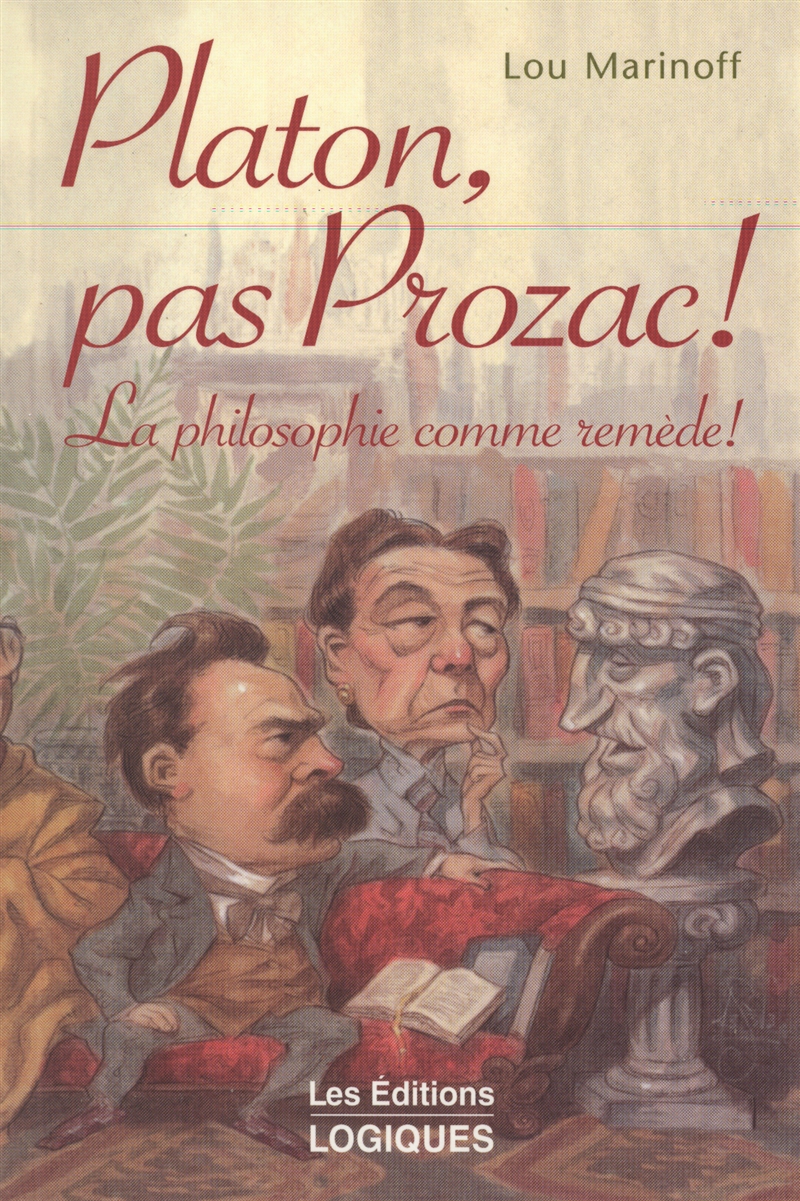
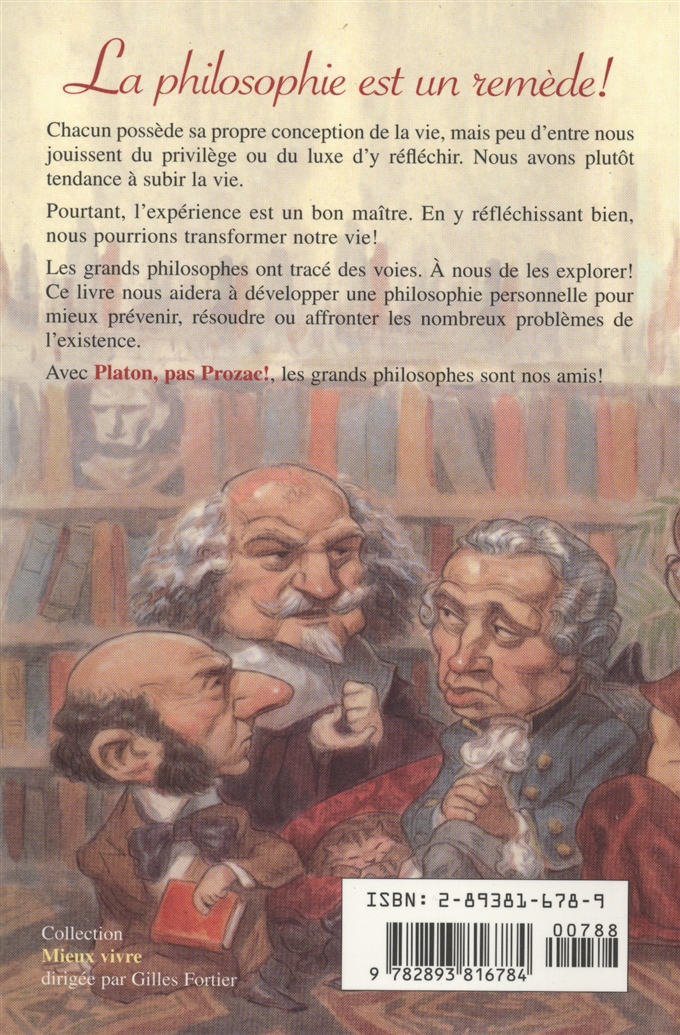
Chacun possède sa propre conception de la vie, mais peu d’entre nous jouissent du privilège ou du luxe d’y réfléchir. Nous avons plutôt tendance à subir la vie.
Pourtant, l’expérience est un bon maître. En y réfléchissant bien, nous pourrions transformer notre vie !
Les grands philosophes ont tracé des voies. Un nous de les explorer. Ce livre nous aide à développer une philosophie personnelle pour mieux prévenir, résoudre ou affronter les nombreux problèmes de l’existence.
Avec Platon, pas Prozac !, les grands philosophes sont nos amis !
1994: Fair New World, Backlash Books, Vancouver.
Worldwide Services
» Philosophical Counseling
» Events for Groups/Organizations
» Leadership Events
» Speaking and Book Events
to book a keynote speech, please email Raleigh Addington at
Chartwell Worldwide Speakers Bureau
APPA
Lou is founding president of the American Philosophical Practitioners Association, and founding editor of its Journal, Philosophical Practice.
https://appa.edu
CONTEMPORARY PHILOSOPHICAL PRACTICE:FORCES THAT FAVOR, AND HINDER, ITS PROGRESS
LA PRATIQUE PHILOSOPHIQUE CONTEMPORAINE : LES FORCES QUI FAVORISENT ET ENTRAVENT SON ÉVOLUTION
LOU MARINOFF
This article is adapted from my acceptance speech for the Doctor Honoris Causa, conferred
by the West University of Timisoara, Romania, on April 23, 2019.
Abstract
During the past several decades, philosophical practice has emerged as a viable and global movement of philosophers, who – notwithstanding the many methods, styles, and schools that have evolved – share the premise that philosophy has applicability to and indeed utility for addressing and resolving numerous problems that arise in the daily lives of individuals, groups, and organizations. A constellation of favorable forces has abetted the emergence of philosophical practice, but likewise another constellation of opposing forces has obstructed its progress. The aim of this article is to identify and analyze ten of the more prominent features of both constellations. As we shall see, in many instances these features are actually Janus-like; that is, they look in both directions at once, simultaneously helping and hindering.
CONCLUSIONS
In sum, philosophical practice is more relevant and necessary than everbefore, and in every sector of society. As I have maintained from the outset,credible philosophical practitioners must be trained in the academy, as are credible practitioners of every other profession. And indeed, a small but pioneering vanguard of universities, from several European and Asian countries, are nowoffering graduate programs in this nascent field. I salute West University of Timisoara for joining this historic and timely vanguard. It may surprise you, or not, to learn that not one single American university has yet established even an M.A.Program in Philosophical Practice. Although at least one such formal proposal wasresoundingly approved at all academic levels, it was placed in an administratively induced coma by a once-storied institution now sadly committed to furtheringculturally-induced illnesses, instead of their prevention and cure.30
______
30 The City College of New York (CCNY) twice approved a proposed M.A. Program in
Philosophical Practice at every governance level, including by its Provost and President, only to see the proposal buried in administrative “red tape” by the inaccessible Chancellor’s office of the City University of New York (CUNY), of which the formerly free-standing and storied City College (CCNY) has been a mere appendage since the 1960s
Lire cet article
Why Lou Marinoff’s PEACE method is a key innovation when applied to corporate settings
Aleksandar Fatic, Behavioral Philosopher, Professor and Author
A leading American practical philosopher Lou Marinoff conceived the counseling and consultancy method with the acronym PEACE (this method should not be confused with the one with the identical acronym, which is a technique of questioning adopted from the police and military, and applied to HR work in large corporations today). Marinoff’s method contains a definition of the problem (P), elaboration of the problem (E), formulation of potential alternative solutions (A), contemplation (C), and the achievement of equilibrium (E). The first three phases are relatively familiar from various decision-making technologies, however the last two highlight a key feature of decision making that in our rationalist age we are often inclined to forget, yet ones which determine the effectiveness of our acting on our decision in both our private and our organizational, institutional or corporate lives.

Pyrrhonian reflections: a sceptical inquiry into philosophical counselling
Jaco Louw
Dissertation, Stellenbosch University (2021)
Louw, Jaco (2021). Pyrrhonian reflections: a sceptical inquiry into philosophical counselling. Dissertation, Stellenbosch University
Abstract
Philosophical counselling is generally understood as the discussion or resolution of everyday problems with the help of philosophy. However, few agree on this definition. This leads to a crisis of definition for philosophical counselling which in turn causes practical problems regarding, inter alia, the teaching of future philosophical counsellors, the question of method, and the potential scope of philosophical counselling. I identify in this study a prevalent therapeutic thesis on the nature of philosophical counselling which ties together some of the more popular conceptions of philosophical counselling. This thesis predominates when philosophical counsellors focus on the counselling part and neglect the philosophical part of philosophical counselling. This stance keeps philosophical counselling firmly contained within a medico-therapeutic framework. In opposition to this predominant view, I propose a reconceptualisation of philosophical counselling which does not subscribe to the therapeutic thesis and by implication works outside of a medical framework. More specifically, in fleshing out my non-therapeutic understanding of philosophical counselling, I propose twelve context-dependent conditions of philosophical counselling by drawing on a Pyrrhonian disposition and also on examples of philosophical counsellors who begin to work outside of the medico-therapeutic framework. I argue that these conditions should be met for philosophical counselling to stay firmly within the realm of philosophy as an aim in itself, thereby remaining true to its origin and basic orientation, and drawing on its innate strengths. With this fundamental reconceptualisation and the accompanying twelve context-dependent conditions, I propose a novel account of philosophical counselling which (i) does not subscribe to the therapeutic thesis, (ii) gives a novel answer to the problem of educating future philosophical counsellors, and (iii) has a clear scope of potential counselees.
Source : The PhilPapers Foundation.
Lire le document – Stellenbosch University

Philosophical counselling beyond the socratic: a preliminary investigation into expanding and developing philosophical practice
Richard Sivil
Dissertation submitted in fulfilment of the requirements for the degree Doctor of Philosophy, In the School of Religion, Philosophy and Classics College of Humanities
University of KwaZulu-Natal
A review of philosophical practice, commonly referred to as philosophical counselling, reveals an array of approaches with a variety of aims. These aims include problem solving, therapy, scepticism, self-knowledge, wisdom and virtue. I argue that the various approaches to philosophical practice can be understood as aspects of a singular vision of philosophy as phronetic: practical wisdom directed at bringing about / increasing well-being. Contrary to the view that philosophical practitioners use a wide variety of methods, I give evidence that most practitioners endorse a Socratic vision of philosophizing. In accordance with this, the philosophical practitioner applies the Socratic Method and adopts the position of the Socratic gadfly – a critical dialogical partner intent on getting the participant to access and assess her worldview. I argue that such a vision of philosophizing is insufficient to meet the phronetic ends of wisdom and well-being. As such, I maintain that additional visions of philosophizing are required.
Source : University of KwaZulu-Natal.

TOWARDS A DEFINITION OF PHILOSOPHICAL COUNSELLING IN SOUTH AFRICA
by DIRK JACOBUS LOUW
University of South Africa
Louw, Dirk Jacobus (2009) Towards a definition of philosophical counselling in South Africa, University of South Africa, Pretoria, <http://hdl.handle.net/10500/2949>
The purpose of this study was to define Philosophical Counselling (PC) or, more specifically, PC as practised in South Africa. This was done through allowing South African philosophical counsellors to tell their stories about PC. The epistemological framework was that of social constructionism. The study involved a series of in-depth interviews with three South African philosophical counsellors. The major themes that emerged from the participants’ stories seemed to centre around: the existential need for the other; the conceptual need for the other; engaging with the other methodically; and caring for the other. While their stories largely resonate with current and overwhelmingly European and North American conceptions of PC, they also seem to provide a uniquely South African impetus to revise these conceptions. Moreover, the findings of this study may facilitate a dialogue between philosophical counsellors and their colleagues in related professions, especially psychotherapists.
Source : University of South Africa.

The Italian approach to philosophical practices: A socio-cultural perspective
Esposito, Silvia Maria (2023) The Italian approach to philosophical practices: A socio-cultural perspective. Doctor of Philosophy (PhD) thesis, University of Kent,. (doi:10.22024/UniKent/01.02.101023) (KAR id:101023)
My thesis analyses how and why several different disciplines such as Philosophical Counselling, Philosophy for Children and for Community, Socratic Dialogue, Café Philo and Philosophy for Management, have spread in Italy in the 1990s, after being imported from the countries where they originated. These disciplines, which create a new controversial specialism, can be deployed in numerous and disparate fields, such as education, workplace, private life, and leisure. They are characterised by different methodological approaches and have multiple purposes which have been defined as educational, therapeutic, conciliatory, pragmatic, or simply critical. Despite their differences, they have been grouped in Italy under the general label of ‘pratiche filosofiche’ (philosophical practices). In my thesis, I consider philosophical practices as a socio-cultural phenomenon, and as a product of a specific environment. Focusing on Philosophical counselling and Philosophy for Children, I assess the extent to which the Italian cultural, political and institutional milieu has influenced the development of a specifically Italian take on philosophical practices compared to their initial tenets. My main argument is that the introduction of these practices in Italy has represented a partially unsuccessful response to the crisis of institutional philosophy and humanistic culture that is raging not only in Italy but also across the globe. I show that the Italian institutional and cultural context has favoured the emergence of these disciplines as a product to be marketed to an audience of aspiring practitioners and potential users, which jeopardizes their innovative drive. Lastly, I acknowledge the potential of philosophical practices in the country by articulating them to the currents of ‘Italian Theory’, thus highlighting the political value ofsome original applications of these disciplines in the Italian context.
Source : University of Kent.


Connected Communities: Philosophical Communities
Jules Evans
A report for the Arts and Humanities Research Council,
by Jules Evans, policy director of the Centre for the History of the Emotions, at Queen Mary, University of London
November 2012
The proposed research review will look at the contemporary rise of community philosophy groups in the UK and globally, and how individuals and communities use them to enhance well-being, belonging, self-expression and public reasoning. There is growing interest in the idea of philosophy as a way of life that we can practice to live happier and more flourishing lives. But can philosophy really bring people together and create communities, or is it more of a solitary activity? What communities has it created in the past? What forms do community philosophy groups take today? And how could this project encourage their growth?
One of the main aims of the research review is to identify and bring together what research exists on community philosophy groups, in order to stimulate future research in this area. At the moment, academic research into community philosophy groups has not been brought together in a single scoping study, with the result that this dynamic area has not received sufficient academic attention. This would be the first comprehensive review of existing academic literature on philosophy groups, and would play a valuable role for future researchers.
The project would also have a practical component, and would act as a catalyst for the growth of the grassroots philosophy movement, strengthening ties between academics, think-tanks and philosophy groups; increasing academic and media awareness of philosophy groups; and setting up a new ‘philosophy hub’ website, with an interactive map to help people find their nearest philosophy group, and to help philosophy groups attract new members.
Finally, the project would seek to increase the role of philosophy groups in the British government’s ‘national initiative on well-being’, which at the moment is dominated by a social scientific and technocratic approach. The project would show how philosophy groups empower people to reason their way towards their own definitions of well-being and flourishing, rather than having definitions imposed upon them. Grassroots philosophy groups therefore have an important role to play in making the ‘national initiative on well-being’ more humanistic, participatory and democratic. The project’s collaborative partners include organisations closely involved with the ‘national initiative on well-being’, including the RSA and the new economics foundation.
Source : Queen Mary University of London.

REPORT OF THE COURSE ON PHILOSOPHICAL COUNSELLING WITH AMERICAN PHILOSOPHICAL PRACTITIONERS ASSOCIATION
Madhulika Sharma – Vikas Baniwal – Ashwini Mokashi – Charu Thapliyal – Mitali Bhagabati – Sudeep Raj Kumar
This is a report of the course on Philosophical Counseling with American Philosophical Practitioners Association which encompasses the summaries of the course of study and training alongside individual group sessions with different expertise from the field.
Philosophy – the quintessential component of knowledge, which discusses the fundamental questions such as ‘what is knowledge?’, ‘how is it acquired?’ and ‘what is to be done with it?’ – is unfortunately missing from the public epistemologies. It is paradoxical that though the quest for knowledge in its new forms and perspectives is increasing constantly, something that is foundational to all forms and perspectives of knowledge is being neglected to the core. Something that contributed to this state of affairs, at least indirectly, is the way in which Philosophy is being reduced to the academic world with its basic forms of teaching and research. What is required at this juncture is taking philosophy beyond academia into the public epistemologies in a convincing way.
There are different existent ways of applying philosophical knowledge that are being innovated, which include, but are not limited to, Philosophy Cafes, Philo dramas etc. One such significant endeavor is Philosophical Counseling which attempts to support those who need a philosopher to address their concerns. It is often placed antagonistic to Psychological and other forms of counselling which is not true. Philosophical counselling moves along with other disciplines in their practices – by sharing and accepting the expertise wherever it is useful. However, it also demarcates its uniqueness by addressing the human concerns that are exclusive to its domain. Though every discipline in one way or the other is developed to address a particular human concern, no single discipline can claim to be capable of addressing all the concerns of human life. For instance, Psychological Counseling addresses certain issues of human concern such as depression and anxiety, whereas Philosophical Counseling addresses existential human concerns that are unique to Philosophy. The difference also lies in the fact that philosophical concerns are much deeper, more pervasive and universal than the concerns of other disciplines.
The practitioners of Psychological Counseling are well-suited for treating mental illnesses, but while that is a great need for the society, it is also necessary for dealing with various levels of confusion among the minds of people. Strengthening their mental health and making sure that they do not fall in the clutches of mental illnesses is a job that philosophers are well suited for. If we want to keep people productive, sane, at peace and out of trouble, philosophers can help in a big way by applying philosophical wisdom to those, who think they can benefit by the philosophical understanding. Applied philosophy is best practiced by students/teachers of philosophy, who have reached a certain depth of understanding philosophical or wisdom principles.
Source : Academia.edu Publishing.
Società Italiana di Counseling Filosofico
Scuola Superiore di Counseling Filosofico e Pratiche Filosofiche / SSCF
PRÁCTICAS FILOSÓFICAS EN ITALIA: ORIENTACIONES Y PERSPECTIVAS DESDE SUS ORÍGENES HASTA LA ACTUALIDAD1
PHILOSOPHICAL PRACTICES IN ITALY: GUIDELINES AND PERSPECTIVES FROM ITS BEGINNINGS TO THE PRESENT DAY
LUCA NAVE
Società Italiana di Counseling Filosofico
Nave, L., & Bazzanella, G. (2021). PRÁCTICAS FILOSÓFICAS EN ITALIA: ORIENTACIONES Y PERSPECTIVAS DESDE SUS ORÍGENES HASTA LA ACTUALIDAD. Revista Internacional De Filosofía Aplicada HASER, (8), 13–38. Recuperado a partir de https://revistascientificas.us.es/index.php/HASER/article/view/15069
Source : haser.
KEY CONCEPTS IN PHILOSOPHICAL COUNSELLING
BLANKA ŠULAVÍKOVÁ
This paper is part of a project funded by VEGA grant no. 2/0053/12
Šulavíková, Blanka. « Key concepts in philosophical counselling » Human Affairs, vol. 24, no. 4, 2014, pp. 574-583.
This article explores various interpretations of philosophical counselling. These interpretations are determined by the nature and status of the key concepts from which they are derived. The first is “critical thinking”, which a number of authors have based their conceptions on; just two examples are mentioned in the article—Elliot D. Cohen and Tim LeBon. Many philosophical practitioners, especially those whose philosophizing is influenced by Socrates, use critical thinking, and indeed believe that it is what philosophical practice is all about. Pierre Grimes is another example of someone who has been influenced by Socrates. Eckart Ruschmann and Ran Lahav believe that interpreting world beliefs is the basis of philosophical counselling. Others think philosophical counselling stems from interpretations of the concept of “wisdom”. The article also discusses Ran Lahav’s more recent views and those of Gerald Rochelle. The concept of “virtues” is discussed in relation to the work of Arto Tukiainen, Lydia B. Amir and Jess Fleming.
Cet article explore les différentes interprétations de la consultation philosophique. Ces interprétations sont déterminées par la nature et le statut des concepts clés dont elles découlent. Le premier est la « pensée critique », sur laquelle un certain nombre d’auteurs ont fondé leurs conceptions ; seuls deux exemples sont mentionnés dans l’article : Elliot D. Cohen et Tim LeBon. De nombreux praticiens de la philosophie, en particulier ceux dont la philosophie est influencée par Socrate, utilisent la pensée critique et croient même qu’il s’agit de l’essence même de la pratique philosophique. Pierre Grimes est un autre exemple de personne influencée par Socrate. Eckart Ruschmann et Ran Lahav pensent que l’interprétation des croyances du monde est la base de la consultation philosophique. D’autres pensent que la consultation philosophique découle de l’interprétation du concept de « sagesse ». L’article aborde également les opinions plus récentes de Ran Lahav et celles de Gerald Rochelle. Le concept de « vertus » est abordé en relation avec les travaux d’Arto Tukiainen, de Lydia B. Amir et de Jess Fleming.
Traduit avec http://www.DeepL.com/Translator (version gratuite)
Source : From the journal Human Affairs
PHILOSOPHICAL COUNSELLING BASED ON DIALOGICAL CRITICAL THINKING 1
BLANKA ŠULAVÍKOVÁ
From the journal Human Affairs
Various approaches and methods are used in philosophical counselling. Two main trends can be observed: the first is the use of contemplative methods and the second constitutes approaches based on dialogical critical thinking. The author defends the idea that developing philosophical counselling on the basis of critical thinking presupposes that it is possible for counsellor and client to hold a philosophical dialogue where the relationship is one of expert/lay person. J. Šulavík has described this relationship in greater detail. In the Socratic model, the philosopher and the lay person hold a dialogue whereby they ascertain opinions via inductive comparison and by defining things, creating a shared concept. While the Platonic and Enlightenment models were grounded in the authority of the expert philosopher, in the Socratic and postmodern models, the expert philosopher loses the power to manipulate those who know “less”. Lay people are not passive consumers of a particular “optimal” philosophy but through their own “philosophising” create philosophy and tailor it for themselves. While philosophising, therefore, the philosopher does not take on the role of “producer” of philosophy but of “adviser” (consultant). It is therefore supposed that people have a general need for philosophy and that ultimately they should create and reflect upon their own philosophy. Key words: philosophical counselling; critical thinking; Socratic dialogue.
Diverses approches et méthodes sont utilisées dans la consultation philosophique. Deux grandes tendances peuvent être observées : la première est l’utilisation de méthodes contemplatives et la seconde constitue des approches basées sur la pensée critique dialogique. L’auteur défend l’idée que le développement de la consultation philosophique sur la base de la pensée critique présuppose qu’il est possible pour le conseiller et le client de tenir un dialogue philosophique dans le cadre d’une relation expert/interlocuteur. J. Šulavík a décrit cette relation de manière plus détaillée. Dans le modèle socratique, le philosophe et le profane entretiennent un dialogue au cours duquel ils se forgent une opinion par comparaison inductive et en définissant les choses, créant ainsi un concept commun. Alors que les modèles platonicien et des Lumières étaient fondés sur l’autorité du philosophe expert, dans les modèles socratique et postmoderne, le philosophe expert perd le pouvoir de manipuler ceux qui en savent « moins ». Les profanes ne sont pas des consommateurs passifs d’une philosophie « optimale » particulière mais, par leur propre « philosopher », ils créent la philosophie et l’adaptent à leurs besoins. En philosophant, le philosophe ne joue donc pas le rôle de « producteur » de philosophie, mais de « conseiller » (consultant). Il est donc supposé que les gens ont un besoin général de philosophie et qu’en fin de compte, ils devraient créer leur propre philosophie et y réfléchir. Mots clés : conseil philosophique ; pensée critique ; dialogue socratique.
Traduit avec http://www.DeepL.com/Translator (version gratuite)
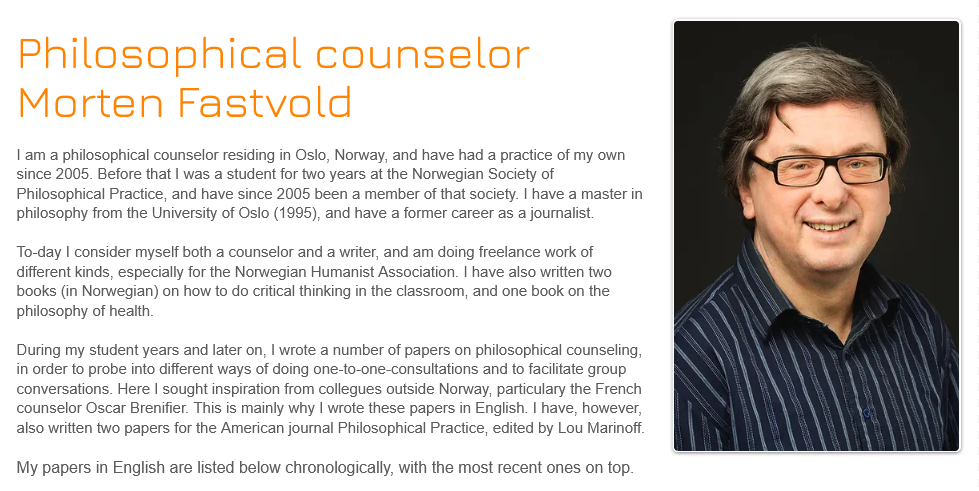
Conversation or interrogation: two different approaches to philosophical counseling
Morten Fastvold
In this paper, presented on the international UNESCO conference New philosophical practice i Paris, November 15.–16. 2006, I compare two different ways of doing philosophical consultations; either by focusing on a method, or by focusing on the counselor’s personality.
Rooting Philosophy in Lived Experience: some Notes on Petra von Morstein’s Lecture and Workshop in Oslo, March 2005
Morten Fastvold
The German-Canadian philosopher Petra von Morstein is well reknown in the field of philosophical counseling, and has influenced counselors worldwide. I present in this paper von Morstein’s way of doing philosophical counseling, based on her lecture and seminar during her visit to Oslo in spring 2005.
Beyond Method, Anders Lindseth Style: The Quest for Opening up the Philosophical Space in the Consultation Room
Morten Fastvold
The philosopher Anders Lindseth is the father of Norwegian philosophical counseling, and has inspired Norwegian counselors since the 1990’s. In this paper, published in the international academic journal Philosophical Practice vol.1 no. 3, Nov. 2005, edited by Lou Marinoff, I present the main principles of Lindseth’s way of doing philosophical counseling, and give a critical assessment of his «beyond method» approach, which is also that of Gert Achenbach, with whom Lindseth has worked a lot.
How Dewey’s View on Aesthetics is Relevant to Philosophical Counseling
Morten Fastvold
The object of this paper, which I have co-written with Gabrielle Aruta, is to counter the misguided view on aesthetics as something superficial, residing at the top of a Maslowian pyramid of needs. Instead the aesthetic dimension is profound in human life, as John Dewey shows in his book Art as Experience. The paper was printed in the journal Philosophical Practice, vol 7 #2, July 2012.
Beyond method, Anders Lindseth style: The quest to open up philosophical space in the consulting room
MORTEN FASTVOLD
The Norwegian Society of Philosophical Counseling
The ‘‘beyond method’’ approach is pivotal to the Norwegian philosopher Anders Lindseth, who pioneered philosophical counseling in Norway, and has been a mentor to other counselors. Being himself influenced by Gerd Achenbach, Lindseth has a distaste for method and therapy, advocating instead the principle of ‘‘touched not-knowing.’’ During a seminar in Oslo last year Lindseth discussed these concepts with students of philosophical counseling, and had a demonstration session to be assessed. Based on the seminary, this article presents the Lindseth position, and looks critically into the notion of ‘‘beyond method.’’ Instead of eschewing method altogether, the author claims that philosophical counselors might employ method in a limited sense without succumbing to ‘‘therapy’’ in the professional, pejatorive sense of the word. Keywords: The beyond method approach, the mode of touched not-knowing, creating a ‘‘free space’’ for thinking, focusing on the guest’s vulnerability, the metaphor of a creek of sighs, the ‘‘structive’’ working mode, the disdain for method and therapy.
Assessing the Promise of Philosophical Counseling: Questions and Challenges for an Emerging Profession
James Tuedio
When philosophers cultivate a professional interest in philosophical practice as a form of counseling therapy, the implicit bias of their The effort seems noble enough, but emulating the model of the helping professions might actually be incommensurate with the philosopher’s calling. The philosophical temperament emulates a less constraining but more aggressive model of intervention than we find operating in the professional domain of therapeutic counseling practices. While the philosophical temperament resolves constraint or the promise of utility, it employs methods of philosophical questioning and analysis decidedly more agonistic than can be motivated under the auspices of the « helping profession » model of therapeutic intervention. The philosophical temperament is a challenging temperament, a probing, testing, inquiry. After setting up this distinction between philosophical practice and the helping professions I pose some thoughts regarding the philosophical encounter within a counseling situation, with emphasis on the challenge of translating back and forth between the client’s subject matter and the philosopher’s frame of temperament encounters two divergent paths we must learn to travel with equal facility: we must make room for beneficial critique in philosophical counseling. The challenge is to see such a philosophical encounter as a place of translation, in which the counselor’s philosophical temperament is exposed to the alterity of the philosophical encounter is exercised in a movement between worlds, as an interweaving dance of translation and innovation characteristic of a « place » of mutual engagement. The resulting tension in these dialogical encounters is a direct consequence of the philosophical intervention in a client’s personal life. The philosopher’s challenge is to negotiate carefully between two domains of translation (between the cognitive-emotive domain of lived-experience and the philosophical domain of conceptual thinking, reflective inquiry and critical analysis), and to establish connections between these domains to facilitate philosophical encounters in a space of shared listening.
Is Philosophical Practice Useful?
(La pratique philosophique est-elle utile ?)
Date Written: September 17, 2022
To what extent – and if so how – philosophical practice is useful, has been discussed from the very beginning of the modern philosophical practice movement. The paper presents and discusses several strategies for answering this question. Some of these strategies involve the risk of conflating philosophical practice with education, social work, existential health work, or therapy. The paper argues that while a philosophical practitioner with the relevant qualifications may well enter the role of being a teacher, social worker, therapist, or existential health worker, and while her background may even make her better in these professional fields, we must avoid using these fields with their pragmatic commitment to predefined goals to define what philosophical practice is. Philosophical practice distinguishes itself from these and similar fields in being tasked with creating and defending a free space for thought where anything can be questioned, any authority may be challenged, and where the guest is radically free to draw her own conclusion.
Keywords: Philosophical practice, philosophy, free thought.
What Is Dialogue? Outline of a Theory
(Qu’est-ce que le dialogue ? Esquisse d’une théorie)
Helge Svare
OsloMet – Oslo Metropolitan University; University of Oslo – Faculty of Theology
Date Written: October 10, 2019
Over the past century, a new meaning of the term dialogue has gained ground in areas like interreligious relations, peace studies, organizational development, conflict resolution, and others. According to this new meaning of the term, dialogue is a conversation conforming to certain standards and ideals, like fairness and openness and with a unique capacity to realize significant organizational and societal goals. For instance, dialogue is today employed to promote collective learning, improve workplace democracy, resolve conflict, and more. So far, however, few examples of systematic or coordinated theory development or research addressing the dialogical practice corresponding to this new understanding of dialogue have emerged. Valuable theoretical contributions exist, however, in sum they represent for the most part a fragmented landscape, with few examples of coordinated theory development, or systematic or cumulative research. This paper seeks to ameliorate this shortcoming by proposing a theory of dialogue – as the term is here being used – with the aim of promoting more systematic and coordinated theory development and research addressing dialogue as practice. Drawing upon contributions from pragmatic linguistics and cooperation theory, it defines dialogue as cooperation through the medium of language. Further, it identifies three basic dialogical skills: empathy, imagination, and flexibility. The article addresses researchers who seek a better theoretical basis for research on dialogue, as the term is being used in this article, as well as practitioners seeking to better understand and improve their dialogical practice.
TRADUCTION
Au cours du siècle dernier, une nouvelle signification du terme dialogue a gagné du terrain dans des domaines tels que les relations interreligieuses, les études sur la paix, le développement organisationnel, la résolution des conflits, etc. Selon cette nouvelle acception du terme, le dialogue est une conversation conforme à certaines normes et à certains idéaux, tels que l’équité et l’ouverture, et dotée d’une capacité unique à réaliser des objectifs organisationnels et sociétaux significatifs. Par exemple, le dialogue est aujourd’hui utilisé pour promouvoir l’apprentissage collectif, améliorer la démocratie sur le lieu de travail, résoudre les conflits, etc. Jusqu’à présent, cependant, peu d’exemples de développement théorique ou de recherche systématique ou coordonnée portant sur la pratique dialogique correspondant à cette nouvelle conception du dialogue ont vu le jour. Il existe des contributions théoriques précieuses, mais elles représentent pour la plupart un paysage fragmenté, avec peu d’exemples de développement théorique coordonné ou de recherches systématiques ou cumulatives. Ce document cherche à remédier à cette lacune en proposant une théorie du dialogue – tel que le terme est utilisé ici – dans le but de promouvoir un développement théorique et une recherche plus systématiques et coordonnés sur le dialogue en tant que pratique. S’inspirant des contributions de la linguistique pragmatique et de la théorie de la coopération, elle définit le dialogue comme une coopération par le biais du langage. Il identifie en outre trois compétences dialogiques de base : l’empathie, l’imagination et la flexibilité. L’article s’adresse aux chercheurs qui cherchent une meilleure base théorique pour la recherche sur le dialogue, tel que le terme est utilisé dans cet article, ainsi qu’aux praticiens qui cherchent à mieux comprendre et à améliorer leur pratique du dialogue.
Traduit avec http://www.DeepL.com/Translator (version gratuite)
Three Questionable Assumptions of Philosophical Counseling
(Trois hypothèses discutables de la consultation philosophique)
Lydia B. Amir
Lydia B. Amir est professeur de philosophie et directrice des études humanistes à l’École des études médiatiques, au Collège de gestion, à Tel-Aviv, en Israël. Elle est l’auteur de « Humor as a Virtue : Pride, Humility and Humiliation » (ce journal), elle exerce également la philosophie à titre privé.
La pratique philosophique ou le conseil a été décrite comme un ensemble de méthodes visant à traiter les problèmes et les situations difficiles de la vie quotidienne par des moyens philosophiques. Malgré la diversité des méthodes, les conseillers philosophiques semblent partager les principes suivants : 1. La personne conseillée est autonome ; 2. la consultation philosophique diffère de la consultation psychologique et 3. la consultation philosophique est efficace pour résoudre les situations difficiles. Un examen critique montre que ces principes sont problématiques tant au niveau théorique que pratique. Comme je crois que la pratique philosophique est une contribution précieuse à la fois à la philosophie et à la psychologie, bien qu’elle ne soit pas dépourvue de dangers et d’abus potentiels, je suggère que les conseillers philosophiques reconsidèrent la validité théorique et empirique de leurs principes. En m’appuyant sur mon expérience de conseiller philosophique, je tente dans cet article de contribuer à cette tâche tout en présentant au lecteur ce qui constitue, à mon avis, les principaux problèmes dans ce domaine.
Traduit avec http://www.DeepL.com/Translator (version gratuite)
Philosophical Counseling
Understanding the Unique Self and Other through Dialogue
Maria daVenza Tillmanns
International Journal of Philosophical Practice – Volume 2, Issue 4, Spring 2005
Maria daVenza Tillmanns – University of California, San Diego : Currently, I write whimsical, playful, yet serious philosophical stories for all ages. Conducted a project with UCSD bringing philosophy with children in underserved schools in San Diego. I was Philosopher-in-Residence at El Toyon Elementary (an underserved school in San Diego) and at La Jolla Country Day School (a private school). I also conduct philosophy for and with children programs for Teens. I taught at University of California, San Diego for ten years in the Teacher Education Program, Human Development Program, and Communication Department, as well as at UCSD Extension. I received my doctorate from the University of Illinois in1998. My dissertation is: Philosophical Counseling and Teaching: “Holding the Tension” in a Dualistic World, published by ProQuest. In Holland, I conducted a Philosophy for and with Children program at two International Schools in the Netherlands in the early 90’s. Ran Lahav and I co-edited “Essays on Philosophical Counseling,” published in 1995. I have publications in Dutch, British, and American Journals. From 1996-97, I was President of the American Society for Philosophy, Counseling and Psychotherapy (now the NPCA, National Philosophical Counseling Association). My husband and I conducted a bi-weekly Socratic Dialogue group from 2002 to 2007 for inmates at the Metropolitan Correctional Center (MCC) while he was employed as Prison Chaplain. In 2005, I was invited by Princess Irene of the Netherlands to discuss my work on Dialogue. PhilPapers
* * *
Many philosophical counselors seem to be counselors who use or point to philosophical texts or use abstract indeed logical or rational methods when working with a client. I want to introduce the idea of a counseling philosopher, who uses the client’s own concrete experiences as the basis for philosophizing with the client about the nature of the client’s dilemma – using ‘the between’ (Buber) as that special creative space where one employs the art of philosophizing to the unique situation. Otherwise, the particularity of that client gets subsumed under theory or methods, much like what has happened in psychology and which gave rise to Achenbach’s criticisms of psychology/psychiatry. The dialogical of which Buber and Friedman speak is the give and take between client and counseling philosopher of understanding and expanding perceptions confirmed through the actual relationship. Philosophy as an art (and not a method) helps us restore the trust Buber talks about which allows us to engage the world directly and not through categories of thought grounded in psychological or philosophical texts and theories.
De nombreux conseillers philosophiques semblent être des conseillers qui utilisent ou renvoient à des textes philosophiques ou qui utilisent des méthodes abstraites, logiques ou rationnelles lorsqu’ils travaillent avec un client. Je voudrais introduire l’idée d’un conseiller philosophe qui utilise les expériences concrètes du client comme base pour philosopher avec lui sur la nature de son dilemme – en utilisant « l’entre » (Buber) comme cet espace créatif spécial où l’on emploie l’art de philosopher dans une situation unique. Sinon, la particularité de ce client est subsumée par la théorie ou les méthodes, un peu comme ce qui s’est passé en psychologie et qui a donné lieu aux critiques d’Achenbach à l’égard de la psychologie/psychiatrie. Le dialogue dont parlent Buber et Friedman est un échange entre le client et le conseiller philosophe, qui permet de comprendre et d’élargir les perceptions confirmées par la relation réelle. La philosophie en tant qu’art (et non en tant que méthode) nous aide à restaurer la confiance dont parle Buber et qui nous permet d’aborder le monde directement et non par le biais de catégories de pensée fondées sur des textes et des théories psychologiques ou philosophiques.
Traduit avec http://www.DeepL.com/Translator (version gratuite)
THE EARLY DAYS OF THE PHILOSOPHICAL PRACTICE MOVEMENT
Maria daVenza Tillmanns
An excerpt from chapter one of my dissertation: Philosophical Counseling and Teaching: “Holding the Tension” in a Dualistic World (May 1998)
The philosophical practice movement started during the early nineteen eighties in Europe as well as in the United States. It seems to be a perfect example of a Zeitgeist phenomenon. The time was ripe, and a number of people with a strong interest in philosophy « suddenly » had the brain wave, why not apply philosophy to everyday life? Why not apply it to the » the malady of the quotidian . . . ? »1 Some present-day philosophical practitioners recounted how they wanted to study philosophy precisely for its merits with respect to lived life itself and how disappointed they were to find out that academic philosophy seemed to have stripped philosophy of its application to lived reality. Academic philosophy seemed to be just that, academic. Where did the philosophy of Socrates go, the philosophy of the αγορα (agora),2 the marketplace? The idea behind the philosophical practice movement was to take philosophy out of the ivory tower and let her live in the world of the everyday.
Le mouvement de la pratique philosophique a vu le jour au début des années quatre-vingt en Europe et aux États-Unis. Il semble être l’exemple parfait d’un phénomène d’esprit du temps. Le moment était venu, et un certain nombre de personnes fortement intéressées par la philosophie ont « soudainement » eu une idée en tête : pourquoi ne pas appliquer la philosophie à la vie de tous les jours ? Pourquoi ne pas l’appliquer à « la maladie du quotidien… » ? Certains praticiens actuels de la philosophie ont raconté comment ils voulaient étudier la philosophie précisément pour ses mérites par rapport à la vie quotidienne elle-même et combien ils ont été déçus de découvrir que la philosophie académique semblait avoir dépouillé la philosophie de son application à la réalité vécue. La philosophie académique semblait n’être que cela, académique. Où est passée la philosophie de Socrate, la philosophie de l’αγορα (agora)2, la place du marché ? L’idée derrière le mouvement de la pratique philosophique était de sortir la philosophie de sa tour d’ivoire et de la faire vivre dans le monde du quotidien.
Traduit avec http://www.DeepL.com/Translator (version gratuite)
Philosophical practice: Interdisciplinary links with other fields
Vasile Hațegan
Senior Researcher, PhD. West University of Timisoara / South Ural State University Chelyabinsk
The paper includes an interdisciplinary approach to philosophy, which can develop interdisciplinary links with other fields, which are carried out through current philosophical practices, manifested mainly in the form of philosophical counseling. Some of the areas in which these connections have been identified are presented, namely the educational field, life sciences and environmental sciences, interferences with the spiritual or theological field, as well as economics and business, materialized through organizational consulting and ethics applied to organizations and institutions. The conclusion is one of supporting and promoting these practices, which can be further researched and developed on multiple levels, as well as the implementation of a new specialization, in the form of philosophical counseling, as a practice for persons, organizations and communities.
Le document comprend une approche interdisciplinaire de la philosophie, qui peut développer des liens interdisciplinaires avec d’autres domaines, qui sont mis en œuvre par le biais des pratiques philosophiques actuelles, qui se manifestent principalement sous la forme de conseils philosophiques. Certains des domaines dans lesquels ces liens ont été identifiés sont présentés, à savoir le domaine de l’éducation, les sciences de la vie et les sciences de l’environnement, les interférences avec le domaine spirituel ou théologique, ainsi que l’économie et les affaires, matérialisées par le conseil organisationnel et l’éthique appliquée aux organisations et aux institutions. La conclusion est qu’il faut soutenir et promouvoir ces pratiques, qui peuvent faire l’objet de recherches plus approfondies et être développées à de multiples niveaux, ainsi que la mise en œuvre d’une nouvelle spécialisation, sous la forme d’un conseil philosophique, en tant que pratique pour les personnes, les organisations et les communautés.
Traduit avec http://www.DeepL.com/Translator (version gratuite)
Decision Making in Business: Using the Tools of the Philosophical Practice
Vasile Hațegan
West University of Timișoara, Romania
The decision making in business is an essential component of the management, where the
leader, together with his team, are concerned with identifying and finding the optimal solutions to support the decision-making process or to meet the organization’s objectives reflected in the company mission statement. The paper highlights the role that philosophical practice can play in organizations, which provides the management team with specific philosophical tools, such as short Socratic dialogue or dilemma training, as well as practical ways to apply critical thinking, as a tools including in the management process, thus increasing the decision-making capacity for the leaders of the organizations. The critical thinking, often considered to be specific to the educational system, finds its application in the business environment, with help of the philosophical consulting, a specialized practice of philosophical counseling.
La prise de décision dans les entreprises est une composante essentielle de la gestion, où le dirigeant, avec son équipe, est concerné par l’identification et la recherche des solutions optimales pour soutenir le processus de prise de décision ou pour atteindre les objectifs de l’organisation reflétés dans la déclaration de mission de l’entreprise. Le document souligne le rôle que la pratique philosophique peut jouer dans les organisations, en fournissant à l’équipe de direction des outils philosophiques spécifiques, tels qu’un court dialogue socratique ou une formation au dilemme, ainsi que des moyens pratiques d’appliquer la pensée critique, en tant qu’outil inclus dans le processus de gestion, augmentant ainsi la capacité de prise de décision des dirigeants des organisations. La pensée critique, souvent considérée comme spécifique au système éducatif, trouve son application dans l’environnement de l’entreprise, avec l’aide de la consultation philosophique, une pratique spécialisée de conseil philosophique.
Traduit avec http://www.DeepL.com/Translator (version gratuite)
PHILOSOPHICAL PRACTICE AND ETHICS APPLIED IN ORGANIZATIONS
VASILE HAȚEGAN
The paper presents some specific elements of counseling, taken or derived from philosophy, which become the main working tools of new professions that are now emerging in Romania as well, namely philosophical counseling and ethics counseling, with their application in various areas of business, from individuals and groups, to organizations and companies, and even to institutions. Starting from the levels previously identified within organizations where these philosophical practices can take place, from managers to management teams, to workers of the organization or members of community, we highlight new concepts such as philosophical consultancy, philosophical leadership and applied ethics, for both the manager and the management team within a community, company or institution. We conclude that there is a need to develop training programs for specialists trained in ethics counseling and philosophical counseling so that they can work within any organization or institution, by acquiring new skills and abilities that can be generated by the specialization program thus outlined and these can be applied within the institutions or the contemporary business environment.
Ce document présente certains éléments spécifiques du conseil, tirés ou dérivés de la philosophie, qui deviennent les principaux outils de travail des nouvelles professions qui émergent aujourd’hui en Roumanie également, à savoir le conseil philosophique et le conseil en éthique, avec leur application dans divers domaines de l’entreprise, des individus et des groupes, aux organisations et aux entreprises, et même aux institutions. En partant des niveaux précédemment identifiés au sein des organisations où ces pratiques philosophiques peuvent avoir lieu, des managers aux équipes de gestion, aux travailleurs de l’organisation ou aux membres de la communauté, nous mettons en lumière de nouveaux concepts tels que le conseil philosophique, le leadership philosophique et l’éthique appliquée, à la fois pour le manager et l’équipe de gestion au sein d’une communauté, d’une entreprise ou d’une institution. Nous concluons qu’il est nécessaire de développer des programmes de formation pour les spécialistes formés au conseil en éthique et au conseil philosophique afin qu’ils puissent travailler au sein de n’importe quelle organisation ou institution, en acquérant de nouvelles compétences et aptitudes qui peuvent être générées par le programme de spécialisation ainsi décrit et qui peuvent être appliquées au sein des institutions ou de l’environnement commercial contemporain.
Philosophical Counselling and Mediation Theory and Practice: Exploring a Pathway to Justice
Nayha Acharya, Dalhousie University Schulich School of Law
This paper will demonstrate how philosophical counselling would invaluably contribute to the arena of conflict resolution via mediation and civil justice generally. Mediation is a conflict resolution process that involves a third party who facilitates disputants in arriving at a self-determined resolution. This process is being incorporated into civil justice systems globally, but how mediation should be conducted to achieve truly just outcomes needs immediate and thoughtful attention. At its best, mediation empowers parties to co-create a just and fair resolution to their conflict through a dialogical exploration of their interests, needs, and relevant norms and values. This is dramatically different from the adjudicative process, where parties rely on legal frameworks and authoritative judicial decision-making to resolve conflict. In mediation, parties need to recognize and think critically about their worldviews and values. Philosophical counselling can provide mediators with an empathetic and dialogical method of helping parties think critically and rationally and to cultivate clarity, depth, and coherence in their worldview and value system. Enabling such deepened self-understanding would best empower participants to engage in authentic and critical dialogue, which, I argue, is essential to legitimate mediation that leads to just outcomes. This paper will demonstrate how several essential principles of philosophical counselling align precisely with the values, goals, and needs of just mediation (including deep self-understanding, critical awareness of worldviews/values, and propensity for rational dialogue). This paper lays an introductory foundation, ultimately calling for an interdisciplinary/interprofessional approach that would use the insights of philosophical counselling to bring significant benefits to the development of mediation programs and civil justice systems world-wide.
Ce document démontrera comment la consultation philosophique pourrait contribuer de manière inestimable à la résolution des conflits par le biais de la médiation et de la justice civile en général. La médiation est un processus de résolution des conflits qui implique une tierce partie qui aide les parties en conflit à parvenir à une résolution autodéterminée. Ce processus est en train d’être intégré dans les systèmes de justice civile du monde entier, mais la manière dont la médiation devrait être menée pour parvenir à des résultats vraiment justes doit faire l’objet d’une attention immédiate et réfléchie. Dans le meilleur des cas, la médiation permet aux parties de co-créer une résolution juste et équitable de leur conflit par le biais d’une exploration dialogique de leurs intérêts, de leurs besoins et des normes et valeurs qui s’y rapportent. C’est très différent du processus juridictionnel, dans lequel les parties s’appuient sur des cadres juridiques et des décisions judiciaires faisant autorité pour résoudre le conflit. Dans la médiation, les parties doivent reconnaître leur vision du monde et leurs valeurs et y réfléchir de manière critique. Le conseil philosophique peut fournir aux médiateurs une méthode empathique et dialogique pour aider les parties à réfléchir de manière critique et rationnelle et à cultiver la clarté, la profondeur et la cohérence de leur vision du monde et de leur système de valeurs. En permettant une telle compréhension approfondie de soi, on donne aux participants les moyens de s’engager dans un dialogue authentique et critique, ce qui, selon moi, est essentiel à une médiation légitime qui aboutit à des résultats justes. Cet article démontrera comment plusieurs principes essentiels de la consultation philosophique s’alignent précisément sur les valeurs, les objectifs et les besoins de la médiation juste (notamment la compréhension profonde de soi, la conscience critique des visions/valeurs du monde et la propension au dialogue rationnel). Cet article pose les bases d’une approche interdisciplinaire/interprofessionnelle qui utiliserait les connaissances de la consultation philosophique pour apporter des avantages significatifs au développement des programmes de médiation et des systèmes de justice civile dans le monde entier.
Traduit avec http://www.DeepL.com/Translator (version gratuite)
New Frontiers in Philosophical Practice
Lydia Amir
Lydia Amir is currently a Visiting Professor in the Department of Philosophy at Tufts University, USA. Throughout her academic career, she has promoted philosophy both within and outside the academe. A pioneer of the philosophical practice movement, she has regularly contributed to it since 1992, the year she began her practice. She has published extensively on ethics and the practice of philosophy, including over sixty peer-reviewed articles and essays, two books (Humor and the Good Life in Modern Philosophy: Shaftesbury, Hamann, Kierkegaard, and Rethinking Philosophers’ Responsibility), and an anthology edited with Aleksandar Fatic, Practicing Philosophy. An editor and board member of various academic journals, including Philosophical Practice and the Journal of Humanities Therapy, she is also the founder and president of the International Association for the Philosophy of Humor and the president of the Israeli Association for the Practice of Philosophy.
In this volume, an international group of prominent philosophical practitioners brings new methods, aims, problems and audiences to the practice of philosophy. The twelve chapters here exemplify how philosophers can fulfill their responsibility towards their communities, and, ultimately, towards civilization at large. This anthology will prove to be valuable not only to philosophers, both practical and theoretical, but also to professionals and students in education and the helping disciplines. Written in a clear and engaging style, it will be of interest to the general public as well.
Lydia Amir est actuellement professeur invité au département de philosophie de l’université de Tufts, aux États-Unis. Tout au long de sa carrière universitaire, elle a promu la philosophie tant à l’intérieur qu’à l’extérieur de l’université. Pionnière du mouvement de la pratique philosophique, elle y contribue régulièrement depuis 1992, année où elle a commencé à pratiquer. Elle a publié de nombreux ouvrages sur l’éthique et la pratique de la philosophie, dont plus de soixante articles et essais évalués par des pairs, deux livres (Humor and the Good Life in Modern Philosophy : Shaftesbury, Hamann, Kierkegaard, and Rethinking Philosophers’ Responsibility), et une anthologie éditée avec Aleksandar Fatic, Practicing Philosophy. Rédactrice et membre du conseil d’administration de plusieurs revues universitaires, dont Philosophical Practice et Journal of Humanities Therapy, elle est également fondatrice et présidente de l’Association internationale pour la philosophie de l’humour et présidente de l’Association israélienne pour la pratique de la philosophie.
Traduit avec http://www.DeepL.com/Translator (version gratuite)
Philosophical Counseling for Philosophers
A Confession of Images
DAVID BERMAN, DEPARTMENT OF PHILOSOPHY, TRINITY COLLEGE DUBLIN , IRELAND
The main aim of this essay is to open up an area of philosophical counseling that may be described as philosophical counseling for philosophers, where philosophical disabilities or impairments can be identified and treated. This is done by going to the field of mental imagery, which is the context in which the author presents his own imagery impairments and the negative impact they have had on his work in philosophy. The author also tries to show how attending to differences in imaging ablity can help to settle such classic disputes in philosophy as that between Locke and Berkeley on abstract general idea.
L’objectif principal de cet essai est d’ouvrir un domaine de conseil philosophique que l’on pourrait qualifier de conseil philosophique pour les philosophes, où les handicaps ou déficiences philosophiques peuvent être identifiés et traités. Pour ce faire, l’auteur se penche sur le domaine de l’imagerie mentale, dans lequel il présente ses propres déficiences en matière d’imagerie et l’impact négatif qu’elles ont eu sur son travail en philosophie. L’auteur tente également de montrer comment la prise en compte des différences de capacité d’imagerie peut aider à résoudre des conflits classiques en philosophie, comme celui entre Locke et Berkeley sur les idées générales abstraites.
Traduit avec http://www.DeepL.com/Translator (version gratuite)
Philosophical practice at the crossroads: the road to professionalism
Vasile Hategan
July 2021
Interdisciplinary Research in Counseling Ethics and Philosophy – IRCEP 1(2):22-27
Vasile Hategan, Professional Association of Philosophical and Ethical Counseling
Doctor of Philosophy
Senior Researcher for interdisciplinary areas (social and humanities fields).
It is 40 years since the first philosophical practice was opened in Europe by the German philosopher Achenbach, which marked the opening of a new path, dedicated to those who today can practice philosophy for the benefit of people, other than philosophers, who were dedicated to the academic environment, through their writings or through the activity at the philosophical department. If initially this initiative manifested itself mainly only among philosophers, interested in becoming practitioners, this trend diversified with the emergence of the specialization of philosophical advisor, which was possible with the advent of training programs in this new applied field of philosophy.
Cela fait 40 ans que le premier cabinet philosophique a été ouvert en Europe par le philosophe allemand Achenbach, ce qui a marqué l’ouverture d’une nouvelle voie, dédiée à ceux qui peuvent aujourd’hui pratiquer la philosophie au profit de personnes, autres que les philosophes, qui se consacraient au milieu académique, à travers leurs écrits ou à travers l’activité au département philosophique. Si, dans un premier temps, cette initiative ne s’est manifestée principalement qu’auprès des philosophes, intéressés à devenir des praticiens, cette tendance s’est diversifiée avec l’émergence de la spécialisation de conseiller philosophique, rendue possible par l’avènement de programmes de formation dans ce nouveau domaine appliqué de la philosophie.
Traduit avec http://www.DeepL.com/Translator (version gratuite)
Can Wisdom be Taught by Philosophical Practice?: An Experimental Research in Spain, Norway, Croatia and Mexico
José Barrientos-Rastrojo, Jesús Gómez-Bujedo
Published in Journal of Humanities Therapy 30 June 2019
Philosophy, Education
This paper aims to explain the outcomes of the first international empirical project on Philosophical Practice. It was performed in México, Croatia, Norway and Spain and it was funded by John Templeton Foundation by means of the Center for Practical Wisdom (The University of Chicago). Each country worked on a control group and an experimental group. The results are based on the implementation of the Three Dimensional Wisdom Scale (3D-WS) by Monika Ardelt and on a qualitative research based on personal questionary. Results prove positive improvement in affective and cognitive dimensions on participants. In addition, sessions provoked important modifications in the behavior of some participants after being exposes to the Philosophical Practice workshops.
Cet article vise à expliquer les résultats du premier projet empirique international sur la pratique philosophique. Il a été réalisé au Mexique, en Croatie, en Norvège et en Espagne et a été financé par la Fondation John Templeton par l’intermédiaire du Center for Practical Wisdom (Université de Chicago). Chaque pays a travaillé sur un groupe de contrôle et un groupe expérimental. Les résultats sont basés sur la mise en œuvre de l’échelle de sagesse tridimensionnelle (3D-WS) de Monika Ardelt et sur une recherche qualitative basée sur un questionnaire personnel. Les résultats démontrent une amélioration positive des dimensions affectives et cognitives chez les participants. En outre, les sessions ont provoqué des modifications importantes dans le comportement de certains participants après avoir été exposés aux ateliers de pratique philosophique.
Traduit avec http://www.DeepL.com/Translator (version gratuite)
Philosophy of philosophical counselling
Peter Bruno Raabe
This dissertation critiques both the existing theoretical conceptions of philosophical counselling and accounts of its practice. It also compares philosophical counselling with psychotherapy in order to point out the fallacy of the argument that philosophical counselling is radically removed from all forms of psychotherapy. It then presents and defends a four-stage model of philosophical counselling that captures the best conceptions and reports of practice, one that is more comprehensive, more positive (as opposed to the more common characterization of what it is not) more explicit, and more definitive in its conceptualization than any that have been offered in the philosophical counselling literature thus far. Furthermore, this model addresses more of the actual needs of potential clients as they are highlighted in descriptive accounts and case studies, and conforms more closely to justifiable normative criteria of what ought to constitute practice in philosophical counselling than any of the currently existing models. The final chapter highlights those areas in which philosophical counselling is superior to the approaches found in psychotherapy, and explores the benefits of philosophical counselling over other forms of counselling.
Cette thèse critique à la fois les conceptions théoriques existantes de la consultation philosophique et les comptes-rendus de sa pratique. Elle compare également la consultation philosophique à la psychothérapie afin de souligner la fausseté de l’argument selon lequel la consultation philosophique est radicalement différente de toutes les formes de psychothérapie. Il présente et défend ensuite un modèle de conseil philosophique en quatre étapes qui reflète les meilleures conceptions et les meilleurs rapports de pratique, un modèle plus complet, plus positif (par opposition à la caractérisation plus courante de ce qu’il n’est pas), plus explicite et plus définitif dans sa conceptualisation que tous ceux qui ont été proposés jusqu’à présent dans la littérature sur le conseil philosophique. En outre, ce modèle répond davantage aux besoins réels des clients potentiels, tels qu’ils sont mis en évidence dans les récits descriptifs et les études de cas, et se conforme plus étroitement aux critères normatifs justifiables de ce qui devrait constituer la pratique de la consultation philosophique que n’importe lequel des modèles actuellement existants. Le dernier chapitre met en évidence les domaines dans lesquels la consultation philosophique est supérieure aux approches de la psychothérapie et explore les avantages de la consultation philosophique par rapport à d’autres formes de consultation.
Traduit avec http://www.DeepL.com/Translator (version gratuite)
Meeting Socrates; how to do Socratic consultations
Kristof Van Rossem
Philosophical Practice ; 2014; Vol. 9; iss. 1; pp. 1344 – 1351
In this article, I describe how I lead a Socratic dialogue with only one participant. Some critical questions are raised about this Socratic approach. The reader can compare this style to other styles in Philosophical Counselling.
Devrait-on remplacer notre psy par un philosophe?
Avez-vous déjà pensé à converser avec un Nietzsche des temps modernes, à défaut de trouver des psychologues disponibles au Québec? Évidemment, la philosophie ne soigne pas les traumatismes psychiques, mais pour s’interroger sur le sens de la vie, la philothérapie a ses atouts, comme l’explique le docteur en philosophie Martin Arriola.


 Observatoire des nouvelles pratiques philosophiques